
Saint Teresa’s Missionaries of Charity Headquarters
Mother House in Kolkata is the heart of the Missionaries of Charity, founded by Saint Mother Teresa in 1950 and now serving as the global epicenter of her humanitarian legacy. Located on AJC Bose Road, this simple complex houses Mother Teresa’s modest tomb, her preserved room, a moving museum, and the bustling headquarters of sisters serving Kolkata’s poor, making it one of the city’s most spiritually significant and frequently visited sites for pilgrims, admirers, and seekers.
The Missionaries of Charity and Mother Teresa’s Legacy
Founding Story and the Global Movement
Mother Teresa, born in 1910 in Skopje (now North Macedonia), arrived in India in 1929 as a Loreto nun. After receiving her “call within a call” to serve those suffering on Kolkata’s streets, she founded the Missionaries of Charity in 1950 with just 12 sisters. Its mission: “to serve the hungry, the naked, the homeless, the crippled, the blind, the lepers, all those people who feel unwanted, unloved, uncared for throughout society, people that have become a burden to the society and are shunned by everyone”.
From this humble base, the Missionaries have blossomed into a global family of thousands of sisters and volunteers, serving in over 130 countries with homes, schools, clinics, and hospices. Mother Teresa’s work won her the Nobel Peace Prize (1979) and canonization as Saint Teresa (2016), yet the congregation’s lifestyle remains simple, joyful, and utterly devoted to others.
Essence of Service: Sisters’ Daily Work
At Mother House, sisters rise before dawn for prayer, then head out in their blue-bordered saris to Kolkata’s hospitals, slums, and orphanages. They run operations like the “Nirmal Hriday” home for the dying, leprosy clinics, and educational initiatives, returning at night to the discipline and warmth of community life. Visitors encounter an atmosphere where “doing small things with great love” is the norm; the sisters’ kindness and commitment are visible throughout the home.
Exploring Mother House
Mother Teresa’s Tomb: A Place for Reflection
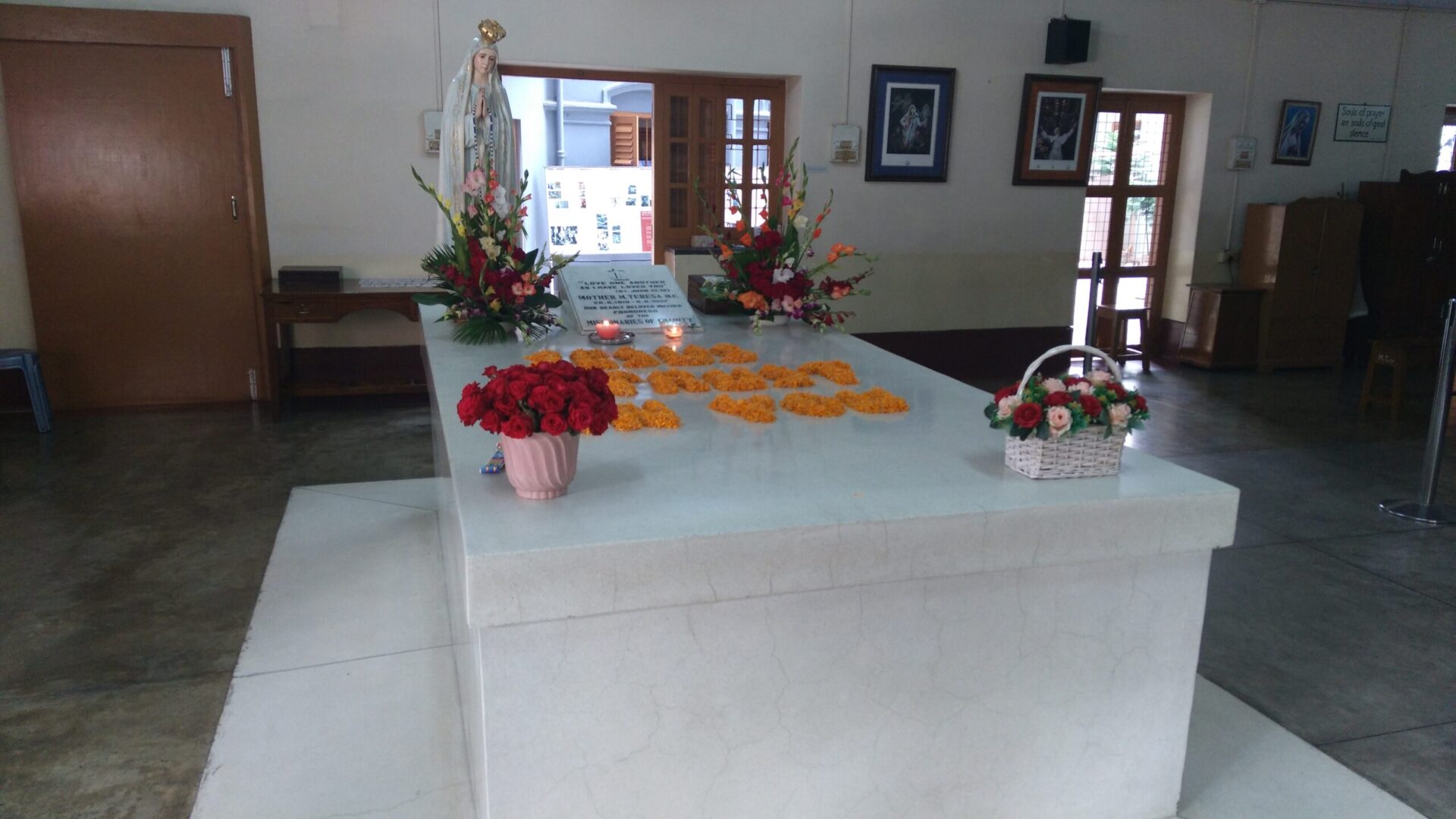
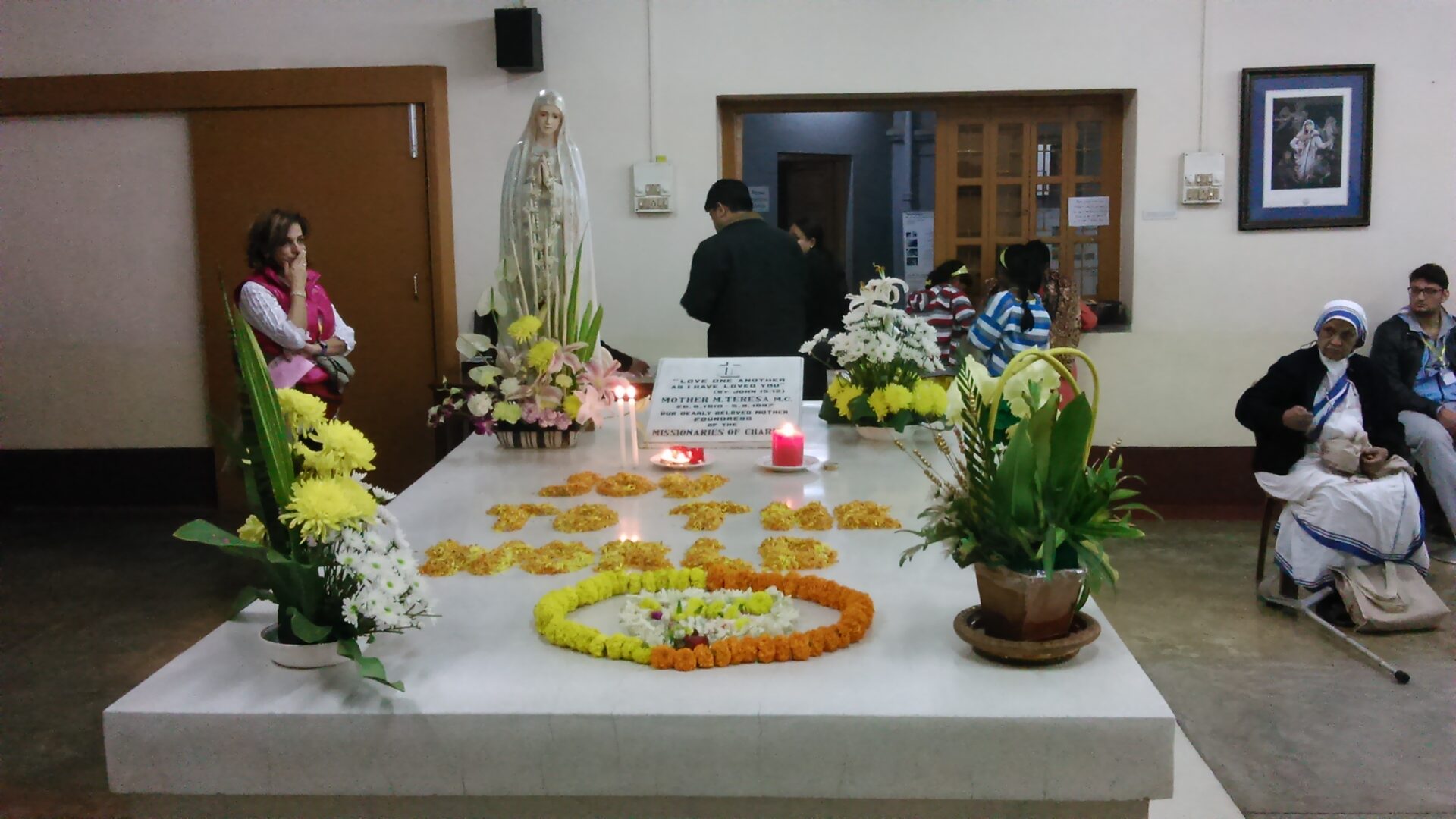
Mother Teresa died on September 5, 1997; her body lies in a simple white marble tomb at Mother House, now the site’s central focus. The atmosphere is luminous and gentle: altar candles and flowers surround the slab bearing only “Love One Another As I Have Loved You.” Pilgrims kneel, leave notes of petition, or just sit in silence as Mass is offered most mornings. It’s a magnet for local devotees, worldwide Catholics, and secular admirers alike, radiating spirituality and humility.
Up a narrow stairwell, her small, austere room remains almost exactly as she left it: a plain cot, battered desk, worn sandals, rosary, and crown of thorns hang above her bed. The objects speak to a life emptied of everything but purpose and love, offering visitors a rare glimpse of holiness in simplicity.
The Museum: Artifacts, Pictures & Inspiration
The attached museum—“Mother Teresa’s Life, Spirit, and Message”—contains an array of poignant relics: her handwritten letters, sari, personal Bible, Nobel medal replicas, photographs, and items from her missions to Africa and Rome. Carefully curated, the museum charts her journey from Skopje to Kolkata to global advocate, showing the practical tools and spiritual resilience behind her charity.
Practical Visiting Information
Timings, Address & Entry Details
-
Open: Monday–Saturday, 8:00/8:30am–12:00pm, 3:00–6:00pm
-
Closed: Thursdays, Aug 22 (Feast of the Queenship of Mary), Easter Monday, Dec 26. Sunday generally limited to prayer/mass.
-
Entry: Always free. No advance ticket or appointment required.
-
Address: 54A, A.J.C. Bose Road, Kolkata 700016
-
Getting There:
-
Metro: Park Street (2km, rickshaw/cab), Sealdah Station (10 mins by auto/taxi)
-
Bus: Ripon Street stop, then short walk
-
Airport: 45–60 min by taxi
-
Dress Code & Visitor Behavior
-
Modest dress: Cover shoulders and knees (no shorts, sleeveless, or revealing attire)
-
Silence and decorum always required; switch phones to silent, and no loud talking
-
Photography: Not permitted inside; you may capture exteriors or ask for exception in museum/room
-
Food, drinks, and large bags: Discouraged inside the house
Volunteering & Prayer at Mother House
-
Mass: Daily (esp. mornings), open to travelers if space allows—timings posted at entrance.
-
Volunteer: Long-term and short-term options available; best to arrange in advance directly with the sisters or at the main reception. Volunteers work in Nirmal Hriday, Shishu Bhavan, and other houses in Kolkata.
-
Prayer petitions: Drop written requests for Friday Mass, collected by nuns weekly
Visitor Experience: What to Expect
-
Expect a tranquil, deeply spiritual atmosphere; soft-lit halls, the sound of prayers, nuns moving quietly to their duties.
-
Most come to pay respects at the tomb, offer flowers, or simply experience the humility and hope that defined Mother’s ministry.
-
Volunteers and faithful from every continent mingle with Kolkatans drawn by Mother’s global message.
-
Devotional objects, handwritten letters, and the sisters’ schedules inspire quiet reflection and a call to purposeful action.
-
Plan to spend 30–60 minutes. Please do not rush; let the serenity and history envelop you.
Frequently Asked Questions
When was Mother House founded?
Mother Teresa founded the Mother House and the Missionaries of Charity on October 7, 1950.
Is Mother Teresa buried at Mother House? Can her tomb be visited?
Yes, her simple white marble tomb is the central focus of the site, and open during all visiting hours for prayer, reflection, and flower offerings.
What are the Mother House visiting hours?
Open Monday–Saturday: 8:00/8:30 AM–12:00 PM and 3:00–6:00 PM. Closed Thursdays and some holidays. Sunday is reserved for prayers and Mass.
Is there any entry fee?
No, entry is always free.
Can I visit the museum or Mother Teresa’s room?
Yes, Mother’s preserved room and the small museum (‘Life, Spirit and Message’) are part of the standard visitor route during open hours.
Is photography allowed?
Photography is typically restricted; ask permission before using a camera. Do not photograph nuns or the chapel without direct consent.
Are there daily Masses or prayers I can attend?
Yes, daily Mass (in English) is celebrated in the chapel—timings are posted outside. All are welcome, but space is limited.
How do I get to Mother House from major transport hubs?
Nearest Metro: Park Street (~2 km). Nearest station: Sealdah. By taxi/rickshaw from either station or Park Street; drivers widely recognize “Mother Teresa’s house”.
What should I wear?
Modest attire is required—cover arms and knees, and respect the local customs. Remove hats and sunglasses upon entering.
How long does a visit take?
Most visitors spend 30–60 minutes, longer if attending prayer, reading, or volunteering.
Can I volunteer at Mother House?
Enquire with the Missionaries of Charity reception; short and long-term volunteer opportunities (e.g., working with the poor, sick, dying) are available.
Is it safe for solo women or foreign tourists?
Absolutely—Mother House is one of Kolkata’s safest, most welcoming sacred sites; security and nuns are assistive, and respectful visitors are appreciated.
office hours
7:00am - 10:00pm (IST)
Address
87EE/16, Anupama Housing Complex, VIP Road, Kolkata, West Bengal, India - 700052


