
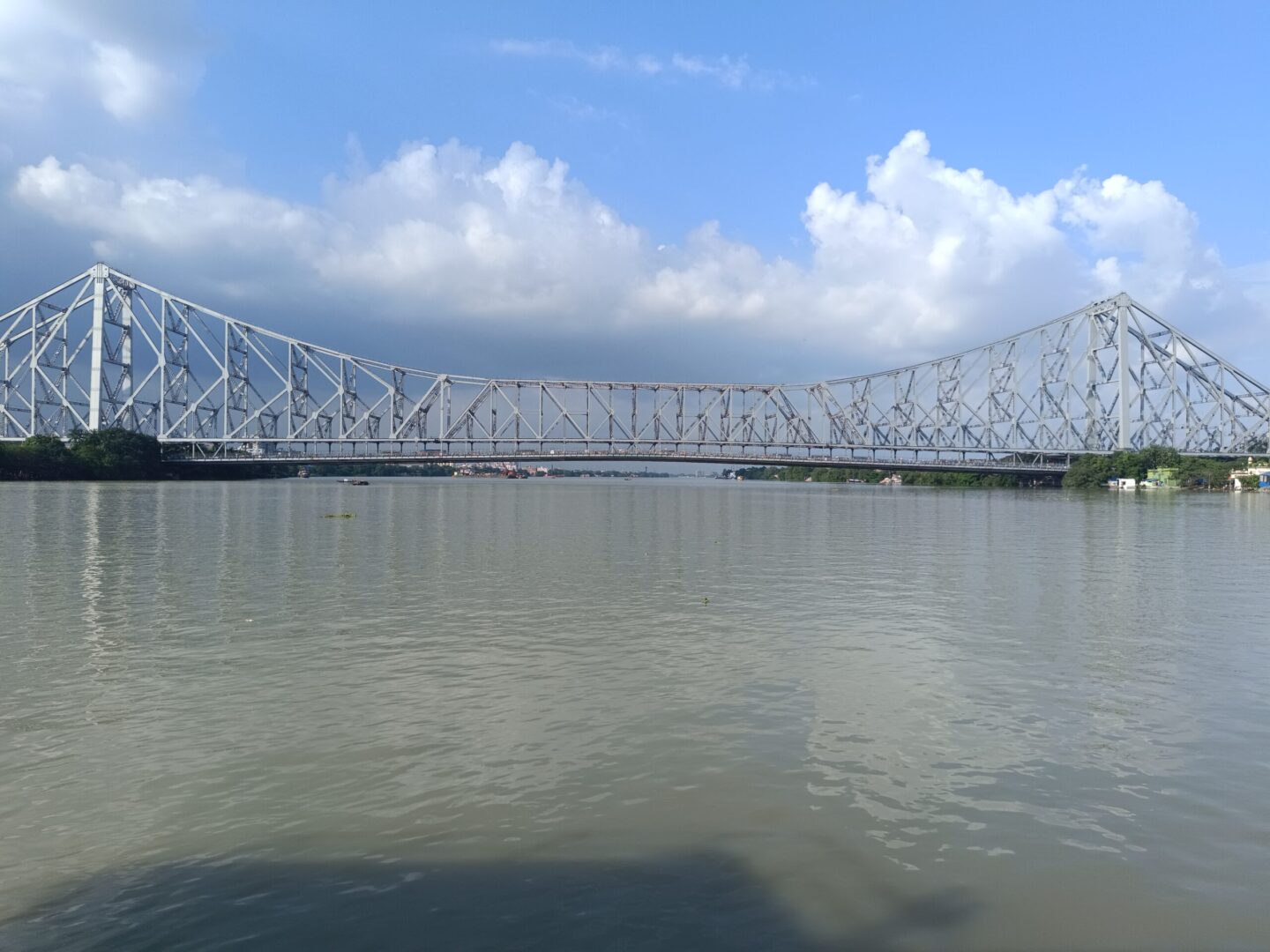
Standing impressively over the Hooghly River since 1943, Howrah Bridge—officially Rabindra Setu—is more than just a link between Kolkata and Howrah; it is a feat of engineering genius, a cultural icon, and a tourist must-see.
Historical Origins & Construction
The Need for a New Bridge
The story of Howrah Bridge began with the British colonial administration’s realization: the original pontoon bridge (built in 1874) could no longer handle Kolkata’s growing traffic and increasingly interfered with river navigation. In the early twentieth century, a commission was set up to create a permanent and robust connection between the busy railway hub of Howrah and the city center.
Planning, Design & British Era
Plans for the bridge’s construction were interrupted by both World Wars. In 1926, after years of debates, committees (Mukherjee Committee, Goode Committee) and expert reports, British engineers settled on a suspension-type balanced cantilever design—the first of its kind at this scale in India. British company Cleveland Bridge & Engineering won the contract, with local firm Braithwaite, Burn & Jessop Construction Co handling the steelwork and assembly.
1936–1943: Built During WWII
Despite material shortages caused by World War II and the diversion of British steel to the war effort, the bridge was completed in 1942 and officially opened for traffic on February 3, 1943. Innovative engineering was required to withstand Japanese air raids and accommodate the rapidly increasing traffic between Howrah and Kolkata. The total construction cost: ₹25 million—an immense sum at the time.
Structure, Materials & Technical Marvels
Cantilever Engineering Explained
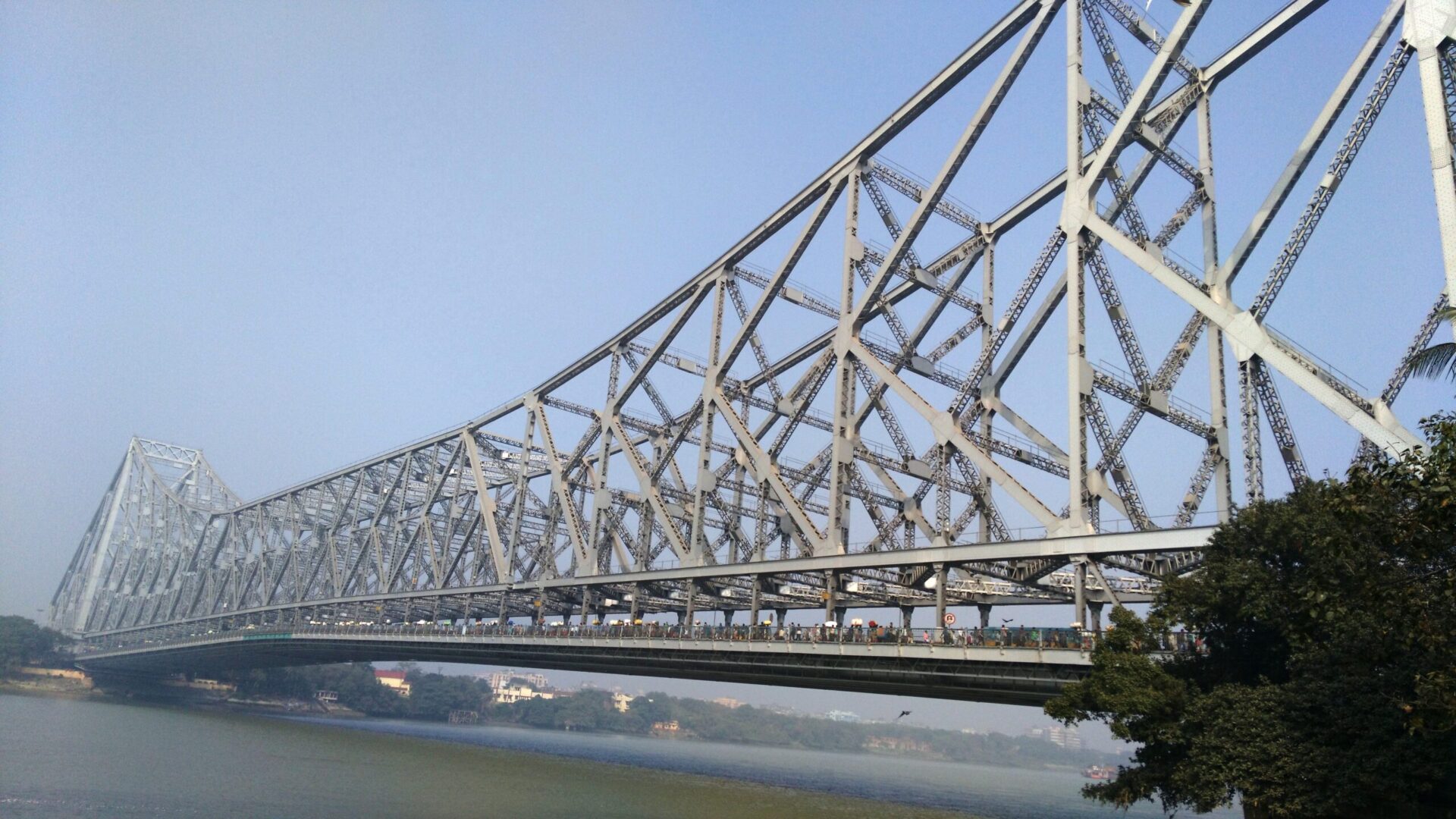
Howrah Bridge is a balanced cantilever suspension bridge—a design where two anchored arms reach out from land and meet in the middle, supporting a massive suspended span with no supporting piers in the river. This means the bridge “floats” above the Hooghly, welcoming larger boats and barges with ease. At its inauguration, it ranked as the world’s third-longest cantilever bridge, now sixth.
Steel, Rivets & Tiscrom Alloy
Perhaps its greatest claim to fame: the bridge contains no nuts and bolts at all. Instead, 26,500 tons of steel—including 23,000 tons of high-tensile “Tiscrom” alloy from TATA Steel—were joined entirely by hand-driven hot rivets. This technique provided superior strength, reduced maintenance, and became a landmark in Indian civil engineering.
Tiscrom's unique composition (Tata Iron & Steel Company + Chromium) offered the necessary mix of toughness and corrosion-resistance to withstand Kolkata’s demanding climate, daily traffic stress, and the salty river air.
Key Dimensions & Features
-
Total Length: 705 meters (2,315 feet)
-
Width: 71 feet (21.6 meters), with 8 lanes for vehicles and pedestrian walkways on either side
-
Height of Main Towers: 85 meters (280 feet)
-
Central Span: 460 meters (1,500 feet)
-
Deck Weight Supported: 100,000+ vehicles and over 150,000 pedestrians daily—making it the busiest cantilever bridge globally
-
Suspended Span: 172 meters (564 feet)
-
Anchorage: Massive caissons (55m x 25m) sunk deep into clay on both banks; designed for long-term durability
Every day, workers maintain and inspect the structure, highlighting its continued importance to Kolkata’s modern life.
Cultural Significance & References
Gateway to Kolkata
Howrah Bridge is constantly called the “Gateway to Kolkata,” as every visitor arriving at Howrah Junction railway station must cross it to enter the city. It is a symbol not only of connectivity, but also of Kolkata’s resilience, welcoming millions through its steel arms since the turbulent days of WWII.
Films, Songs, Art, & Literature
The bridge’s legendary silhouette has featured in numerous films, such as the classic “Howrah Bridge” (1958, starring Madhubala), “The Calcutta Mail” (1971), and inspired musicians like Kishore Kumar (with the song “Aami Kolkata-r Rasogolla” in “Balika Badhu”). Artists including Jamini Roy and Paresh Maity have painted it, while writers like Amitav Ghosh and Jhumpa Lahiri have made it part of their stories.
Howrah Bridge is more than scenery—it is the living pulse of the city’s daily drama, and a popular backdrop for festivals, photoshoots, and Bollywood blockbusters.
Local Stories & Symbolism
Locals cherish tales such as the bridge’s first crossing—by a single tram, not a car! Until 1993, trams traversed the bridge, but were banned due to their weight. Notable river traditions underneath (like the Mallick Ghat Flower Market) add colour and culture, making the area a true sunrise-to-sunset spectacle.
Visiting Information, Timings & Photography Tips
Howrah Bridge Accessibility
-
Open 24/7: Free for both vehicles and pedestrians—no entry fee, no ticket, no restrictions
-
Accessibility: Separate pedestrian paths for safe strolling and great city views
-
Location: Jagganath Ghat, 1 Strand Rd, Kolkata 711101—easily reached by public transport (bus, taxi, from Howrah Junction)
Best Time to Visit & Views
The ideal times:
-
Early Morning (6:00–10:00 AM): Calm atmosphere, fewer crowds, magical sunrise on the Hooghly
-
Late Afternoon (4:30–6:30 PM): Cooler weather, spectacular sunset views and bridge illumination
Winter (Nov–Feb) offers the best weather for walking and photo walks, with temperatures ranging 12–27°C and minimal rain. Evenings are busiest with traffic, but offer sparkling night scenes.
Top Photo Spots & Travel Tips
-
Prinsep Ghat: Best riverfront shots, especially at sunrise or sunset
-
From Below: Marigold-filled shots at Mallick Ghat Flower Market, the bustle of Kolkata in full colour
-
Walking Across: Use wide-angle for crowd, trams, and Kolkata’s chaos in motion
-
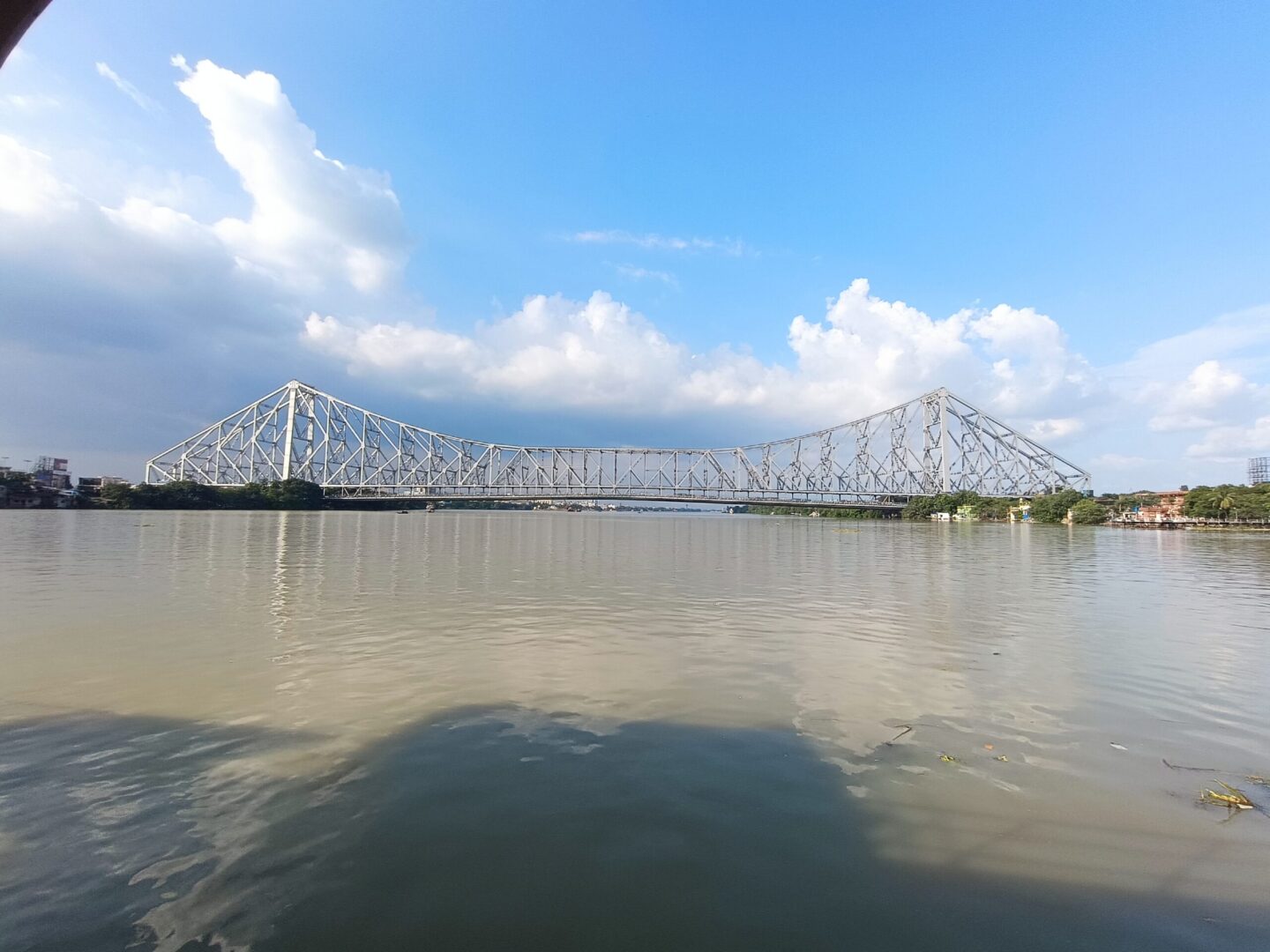
Across the River: Full profile skyline shots; try sunrise or blue hour from Howrah-side ghats
-
Boat Rides: Unusual angles; especially beautiful at dusk or after dark
Tip: Keep camera gear safe, be aware of crowd and traffic, and dress comfortably for long strolls across the bridge and nearby markets.
Frequently Asked Questions
Is there an entry fee to visit Howrah Bridge?
No, Howrah Bridge is free for pedestrians and vehicles. Open 24/7 with no ticket required.
When was Howrah Bridge built?
The bridge was constructed between 1936 and 1942, opening to traffic in February 1943.
What type of bridge is Howrah Bridge?
It is a balanced cantilever suspension bridge, entirely assembled with rivets (no nuts or bolts).
What is the bridge’s official name?
Rabindra Setu, renamed in honor of poet Rabindranath Tagore in 1965, though “Howrah Bridge” remains the popular name.
How busy is Howrah Bridge?
It is one of the world’s busiest bridges—handling 100,000+ vehicles and 150,000+ pedestrians daily.
Can I walk across the bridge?
Yes, there are dedicated lanes for pedestrians. Early mornings and late afternoons are ideal for walks and photos.
Best places for photography?
Prinsep Ghat, Mallick Ghat Flower Market below, sunrise/sunset walks across the span, and Howrah-side river views.
What steel was used to build Howrah Bridge?
Mostly TISCROM, a high-tensile alloy steel developed by Tata Steel, with 23,000 tons used in construction.
Why is Howrah Bridge important for Kolkata?
It is both an engineering marvel and the symbol of Kolkata’s modern identity—connecting the city’s heart to its bustling railway hub, serving as the city’s gateway.
Can vehicles and trams cross the bridge?
Vehicles cross freely; trams used to until 1993, but are now banned due to their weight.


office hours
08:00 AM - 08:00 PM (IST)
Online Operating Hours
Open 24 Hours for E-Mails,
Calls and WhatsApp
Address
87EE/16, Anupama Housing Complex, VIP Road, Kolkata, West Bengal, India - 700052