
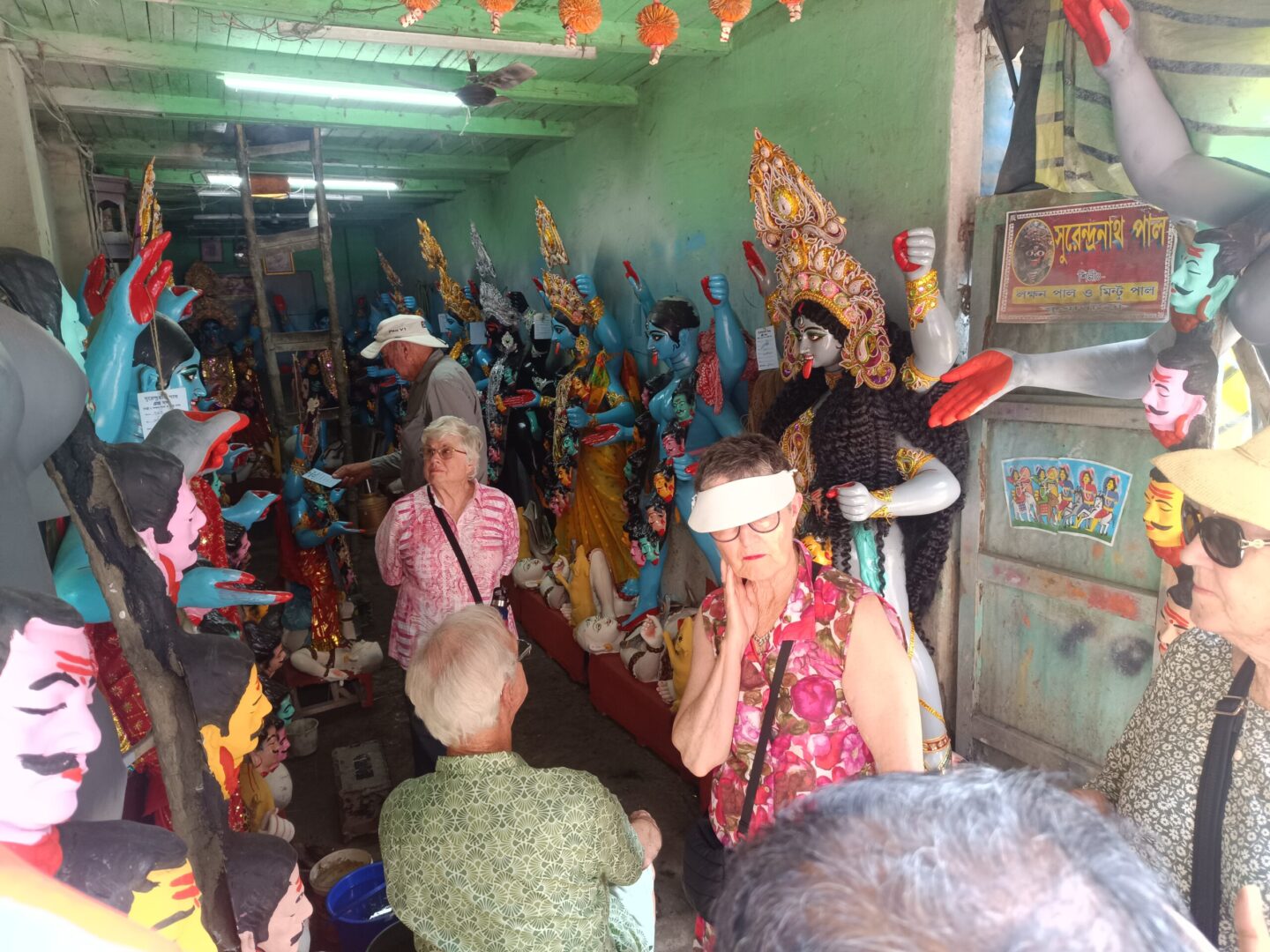
Kumartuli is the living, breathing heart of Kolkata’s artistic heritage—a neighborhood where the rhythmic sound of clay pounding, the scent of wet mud, and the vivid vision of half-finished idols greet visitors along every winding lane. For more than 300 years, Kumartuli’s skilled potters have created the city’s most spectacular images of goddess Durga, Kali, and other Hindu deities, launching annual festival magic in Kolkata and global Bengali communities.
What is Kumartuli? Origins & Heritage
Potters’ Neighborhood & Foundation Story
Kumartuli (“Potter’s Lane”) began as a British East India Company labor allocation in the late 1700s, giving artisans their own district in North Kolkata. Soon, Kumartuli evolved into an artists’ colony, home to craftspeople who shifted from basic pottery to divine sculpture when new Hindu rituals demanded intricate clay images.
Legend holds that influential families summoned potters from Krishnanagar (Nadia) to shape the first city Durga idols for Raja Nabakrishna Deb’s pioneering Durga Puja in 1757, marking Kumartuli’s birth as Kolkata’s hub for festive clay art.
Historical Roots & Artistic Traditions
Kumartuli’s idol makers—known as kumars or pals—are revered for their multi-generational expertise. Techniques, tools, and rituals are tightly woven into community life: every artisan quietly guards family formulas for clay mixes from the Hooghly, precise straw bundles from Baranagar, and fine bamboo from Murshidabad. The neighborhood itself, with its narrow lanes and tiny open-air studios, preserves Kolkata’s pre-colonial cityscape and oral traditions.
Craftsmanship and Community
The Art of Clay Idol Making
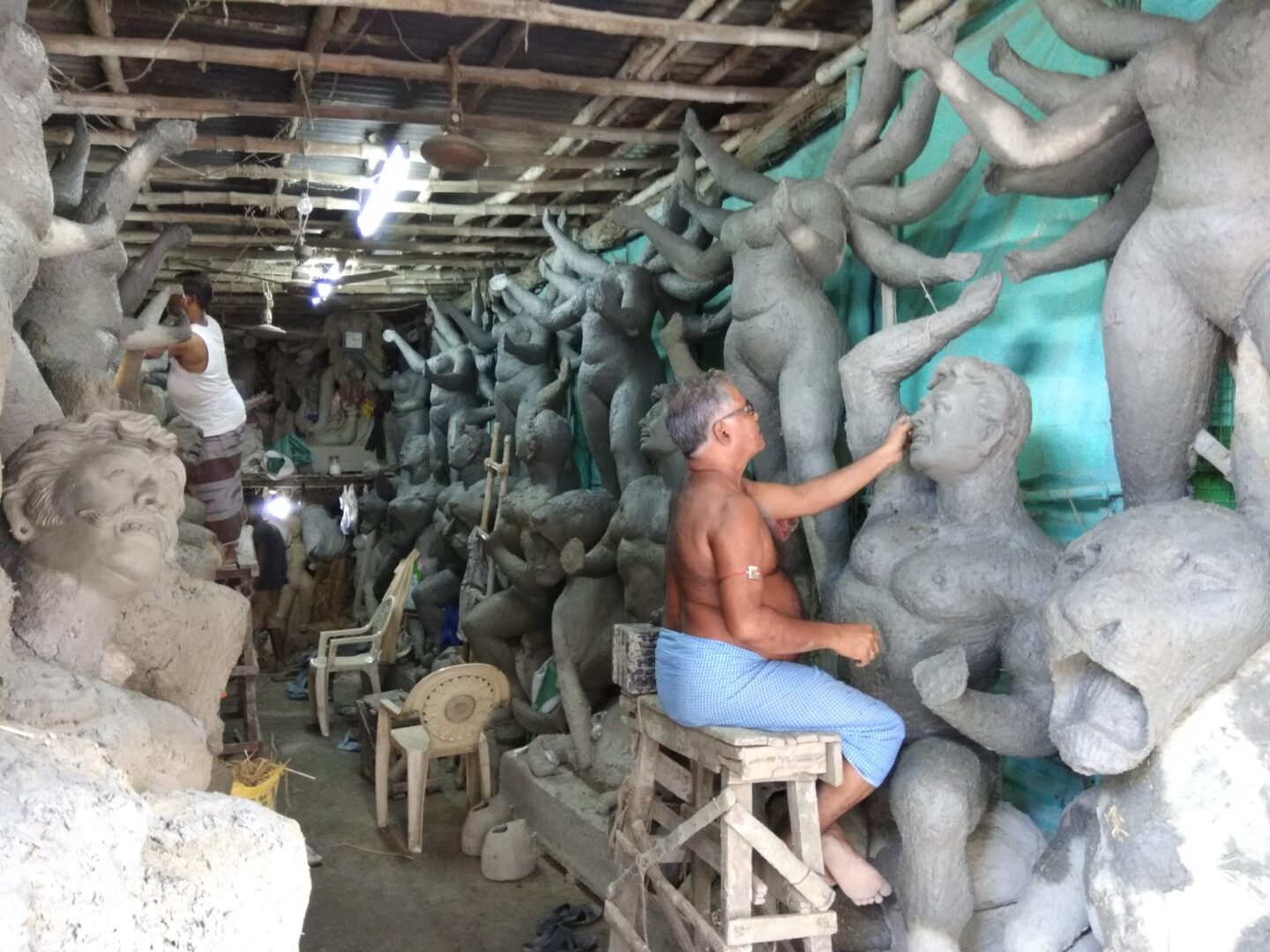
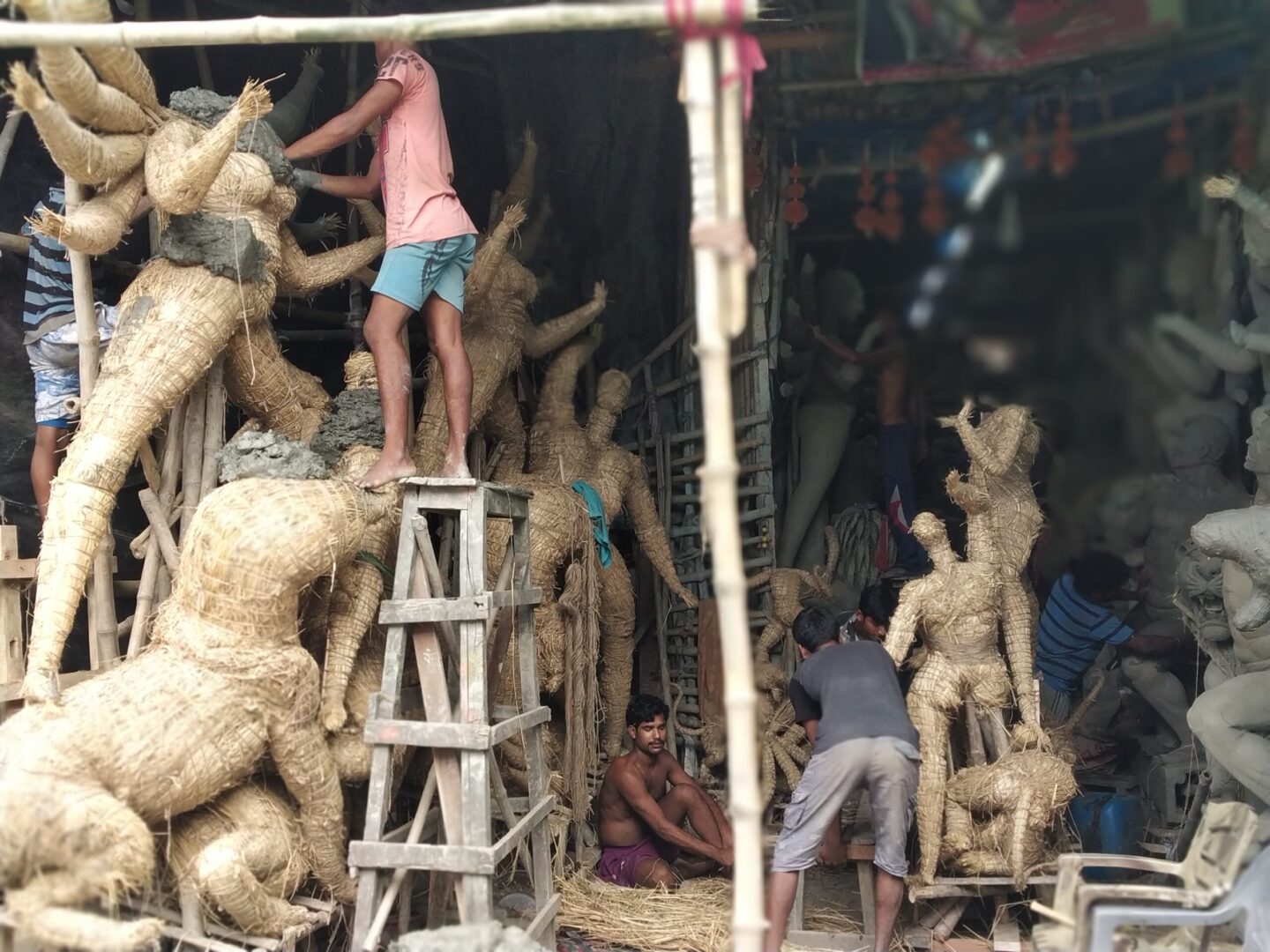
Kumartuli’s signature idols begin as humble straw frameworks, bound with rope, then coated in layers of river mud hand-mixed with rice husk for durability. Artisans build, sculpt, and dry these structures for weeks before layering the surface with fine clay and letting the idols bake in the sun. Detailing—eyes, jewelry, weapons, and faces—is the pinnacle of artistry, performed with ritual purity and emotional reverence.
Some idols reach over 15 feet tall, demanding bamboo scaffolds and team effort. The final painting and ornamentation showcase both classical Bengali aesthetics and innovations for modern tastes.
Family Legacies, Women Artisans & Modern Changes
Kumartuli’s craft houses welcome visitors into the living rooms of Bengal’s oldest artisan families, passing knowledge through generations. Recent years have seen a rise in women idol-makers, who now preserve traditions, innovate with styles, and challenge historic norms.
While some studios are tiny sheds, others appear as full-scale workshops exporting hundreds of idols. Communities, NGOs, and government initiatives now help preserve artisan livelihoods, promote tourism, and assist the next generation in training.
Exporting Bengali Art Worldwide
Beyond Kolkata’s famous Durga Puja, Kumartuli ships thousands of idols to Bengali communities in London, New York, Toronto, Australia, and Africa. International orders have grown steadily, and export packing is now an art in itself—dismantling giant idols, assembling them abroad, and preserving fragile faces in transit.
Festival Season: Durga Puja & More
Kumartuli’s Role in Kolkata’s Biggest Festival
Durga Puja, celebrated every September/October, is Kolkata’s grandest festival. Kumartuli crafts over 4,000 Durga idols per season, each one reflecting a unique combination of traditional religious iconography and modern innovation.
There are idols for pandals (public festival installations), family pujas, tiny roadside shrines, and grand exports. Kumartuli’s workshops buzz with activity from May to October, culminating in final painting, “eye opening” rituals (Chokkhu Daan), and the dramatic last-minute rush before idol immersion.
Idol Creation Schedule & Rituals
The cycle begins as artisans collect special clay from riverbanks in Uluberia; the first touch of clay, called bodhan, takes place on Mahalaya in September. As weeks pass, idols take shape through collaborative effort, layering, painting, and embellishing with jewelry, silk, and flowers.
Final touches—painting eyes, applying sindoor (vermilion), adorning with weapons—often happen in front of local devotees, who gather each year to watch their favorite artists at work.
International Orders and Year-Round Activity
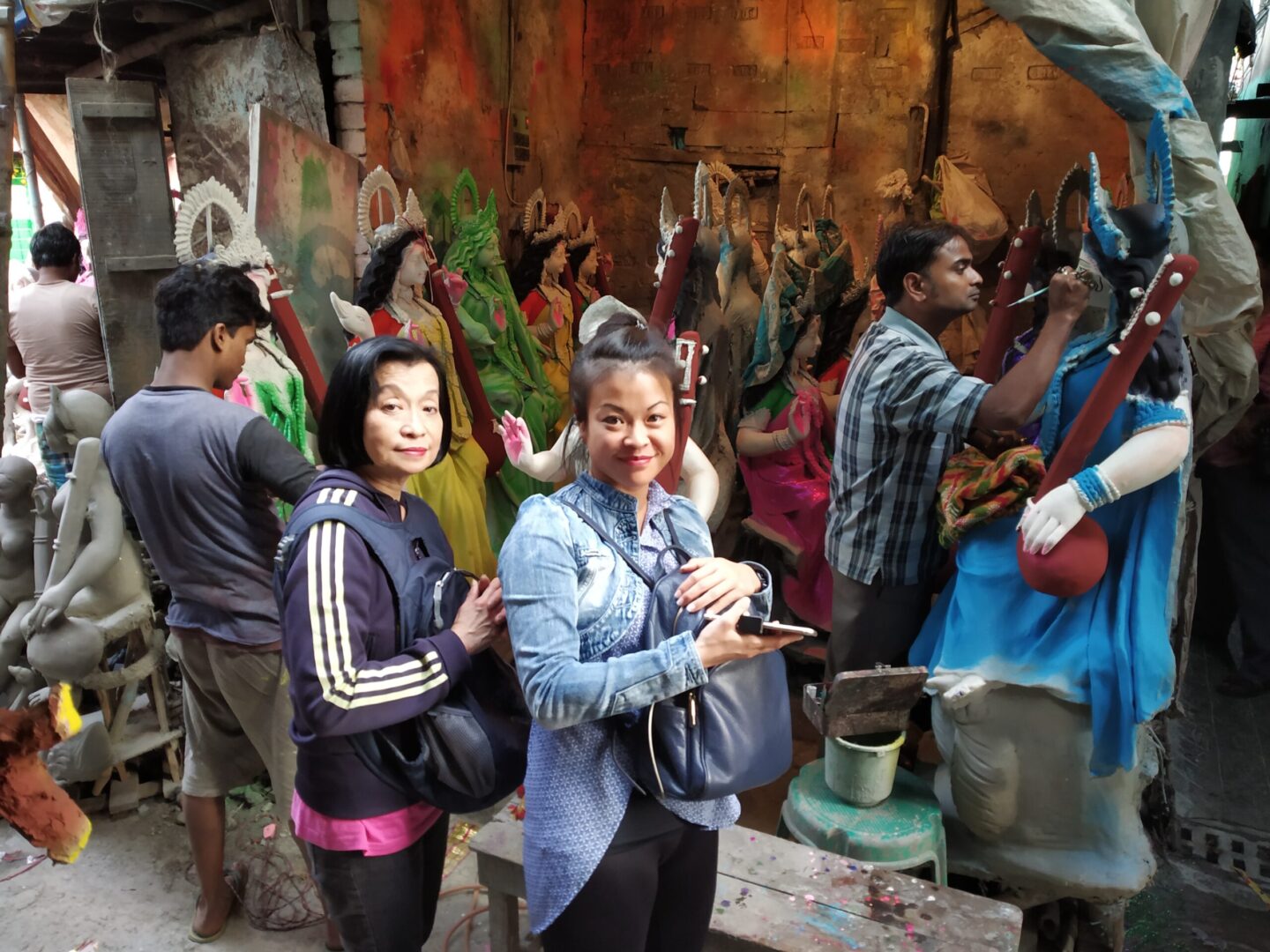
While Durga Puja reigns supreme, Kumartuli’s idol makers also produce images for Saraswati Puja, Kali Puja, Lakshmi Puja, wedding processions, and even Christmas nativity scenes. Many artists have regular commissions for drama groups, museum displays, and fine art exports, keeping Kumartuli vibrant and productive year-round.
Visiting Kumartuli – Practical Guide
Best Time to Visit & What to Expect
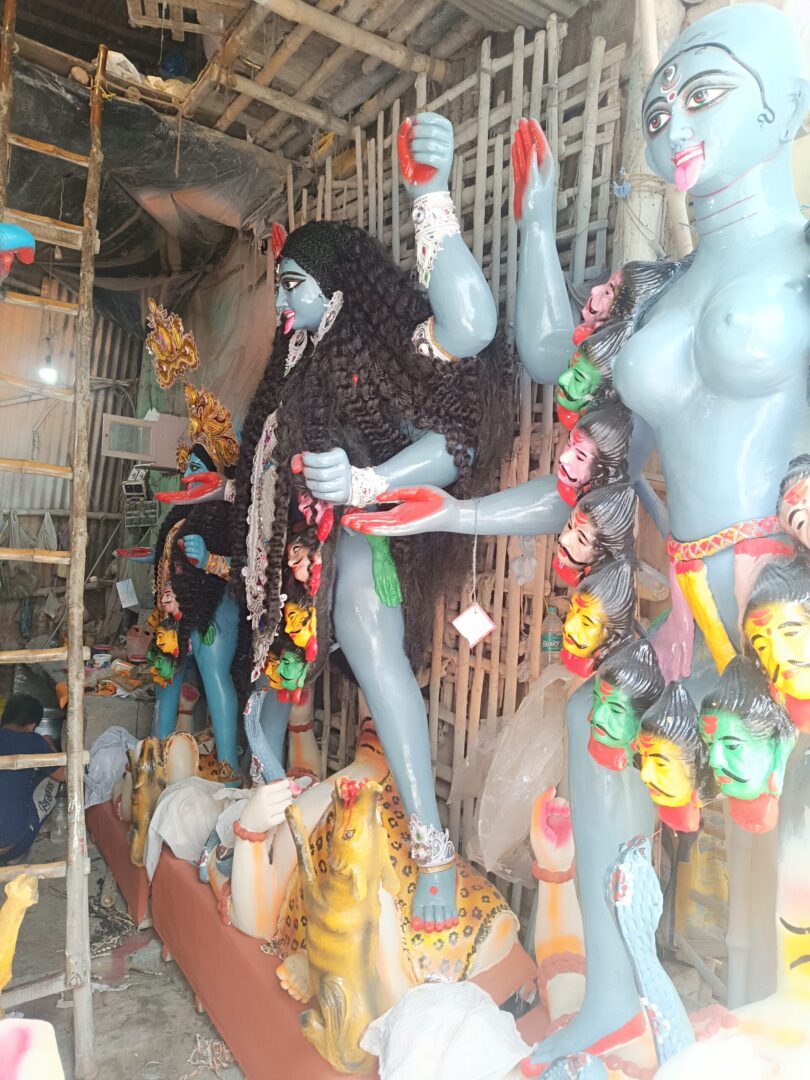
Kumartuli is active all year, but the prime season is July–October, when Durga Puja idols are under construction, workshops are full, and the mood is electric. August–September is best for photography—the moment when idols take shape, faces and eyes are painted, and local excitement explodes.
Morning visits (8–11 AM) offer the best light and least crowding for photographers. Early October is magical, with workshops open late and artisans preparing for final deliveries, pandal installations, and international packaging.
Location, How to Reach, Entry Info
-
Location: Kumartuli, North Kolkata (near Sovabazar Metro Station; ~5 minutes’ walk)
-
How to reach: Metro, bus, or local taxi/auto. The area is walkable; narrow lanes accessible only on foot.
-
Entry: Free and open—no tickets or guides needed; some studios charge for formal tours or photography workshops.
Traveler Tips & Etiquette
-
Respect artists’ privacy—ask permission before photographing a person or unfinished work.
-
Dress modestly and wear comfortable shoes. Expect wet clay, straw, and crowded lanes.
-
Support the community—buy small clay figures or painted works direct from artisans.
-
Early mornings/late evenings are safe; but avoid flash photography during peak working hours.
Kumartuli for Photographers
Photo Tour Essentials & Techniques
Kumartuli is a photographer’s dream: raw textures, bright colors, expressive faces, and ever-changing light.
Bring a fast lens (f/2.8 or wider) for interiors, and keep ISO high for low-light shots inside studios.
Best Angles, Light & Composition
-
Golden hour (early morning) offers beautiful soft light on idol faces and workspaces.
-
Wide-angle shots capture the scale of workshops; close-ups showcase clay details and artisans’ hands at work.
-
Use natural frames—doorways, hanging straw, or crowds—for documentary depth.
Respectful Shooting & Cultural Context
Always ask before shooting people; offer a friendly greeting and small tip when appropriate. Avoid obstructing artisans or crowding workspaces.
Capture storytelling: document the progression from straw armature to finished diva, community collaboration, and festival spirit.
Frequently Asked Questions
What is Kumartuli famous for?
Kumartuli is renowned for its community of skilled clay idol makers who craft the iconic images of goddess Durga and other deities for Kolkata’s Durga Puja and global festivals. It’s a vibrant, historic potters’ colony and a must-visit destination to see traditional sculpting in action.
Where is Kumartuli located? How do I reach there?
Kumartuli is in North Kolkata, near Sovabazar/Shobhabazar metro station. It is easily accessible by metro, bus, or taxi; from the station it’s a 5-10 minute walk through narrow, workshop-lined lanes.
When is the best time to visit Kumartuli?
The most exciting period is June to October, particularly August–September, when Durga idols are being built and painted for Puja. Early mornings offer better light, fewer crowds, and open studio access.
Is Kumartuli open to visitors all year?
Yes, it is open year-round. While idol making for Durga Puja peaks mid-year to autumn, workshops remain active for other festivals and export orders throughout the year.
Is there an entry fee to visit Kumartuli?
No, entry is free. You are welcome to stroll the lanes, explore open studios, and observe artisans at work, but commercial photography may sometimes incur a nominal charge in certain workshops.
Can I take photos in Kumartuli?
Photography is generally allowed, but always ask for permission before photographing people or close-ups of unfinished idols. Avoid using flash and respect artisans’ workspace and routines.
Can I buy idols or souvenirs in Kumartuli?
Yes, many studios sell small clay figurines, painted masks, and decorative items. Buying directly from artisans supports the local community and their tradition.
Are guided tours available?
Yes, we offer guided walking or photography tours, especially during Durga Puja season. These can offer deeper insights and more respectful access to busy workshops.
What etiquette should visitors follow?
Dress modestly, move carefully in crowded or muddy lanes, do not block artisan movement, and avoid littering. Be patient—festival season can be chaotic but is part of the authentic experience.
What else can I see near Kumartuli?
Combine your visit with the riverside ghats, Mallick Ghat Flower Market, Sovabazar Rajbari, or North Kolkata’s historic lanes and old Bengali mansions for a full day of heritage exploration.
office hours
08:00 AM - 08:00 PM (IST)
Online Operating Hours
Open 24 Hours for E-Mails,
Calls and WhatsApp
Address
87EE/16, Anupama Housing Complex, VIP Road, Kolkata, West Bengal, India - 700052


