
Private Guided Day Trip to Bishnupur: Terracotta Temples & Silk Weavers
Tour Duration
12 hours (Flexible)
Easy Pickup
Free Hotel Pick-up & Drop-off
Language
English
Tour Assistance
Available free with every tour
Overview: Day Trip to Bishnupur: Terracotta Temples & Silk Weavers
Step back in time on a private day trip from Kolkata to the historic temple town of Bishnupur, renowned for its magnificent terracotta temples and world-famous Baluchari silk. Bishnupur is located approximately 3 to 4 hours by road from Kolkata. The journey itself is an experience, showcasing lush fields, village life, and the cultural tapestry of the region. Travel in comfort through the scenic Bengal countryside before exploring architectural masterpieces built by the Malla Kings, including Rasmancha, Shyam Rai Temple, Jor Bangla Temple, Madan Mohan Temple, and other remarkable heritage sites. Complete your journey with a visit to traditional silk weaving workshops, where skilled artisans create exquisite handwoven Baluchari sarees using centuries-old techniques.
Why choose this tour?
- Private, personalized experience with an expert local guide.
- Explore UNESCO-recognized heritage and stunning terracotta architecture.
- Visit authentic Baluchari silk weaving workshops and meet local artisans.
- Comfortable private air-conditioned transportation with hotel pickup and drop-off.
- A perfect cultural escape from Kolkata for history, art, and photography lovers.
Book your private Bishnupur tour with Kolkata Trips and uncover one of Bengal's most fascinating heritage destinations.
Why Kolkata Trips?
Free Tour Assistance
Before booking till end of Tour, a dedicated Tour Assistant will be available.
Curated Experiences and Flexible Itineraries
Discover Bishnupur with a Private guide, AC car with hotel pickup.
Hassle-Free Booking & Secure Payment
Booking your tour with us is simple, secure, and convenient. We accept all major Credit and Debit Cards, making the payment process smooth and stress-free for our guests.
Tour Cost
USD 220 per guest.
(minimum 2 guests are required or one willing to pay for two)
Itinerary: Day Trip to Bishnupur: Terracotta Temples & Silk Weavers
Your journey begins around 08:00 AM (flexible) in the morning as your guide from Kolkata Trips welcomes you at your hotel. Leaving behind Kolkata's bustling streets, you travel through the scenic countryside of rural Bengal. The changing landscape--from busy highways to peaceful villages, lush green paddy fields, ponds, and palm-lined roads-offers a refreshing glimpse into everyday life beyond the city.
After approximately three to four hours, you arrive in Bishnupur, where a day filled with history, art, and architectural wonders awaits.
Stop 1: Rasmancha – The Iconic Pyramidal Temple
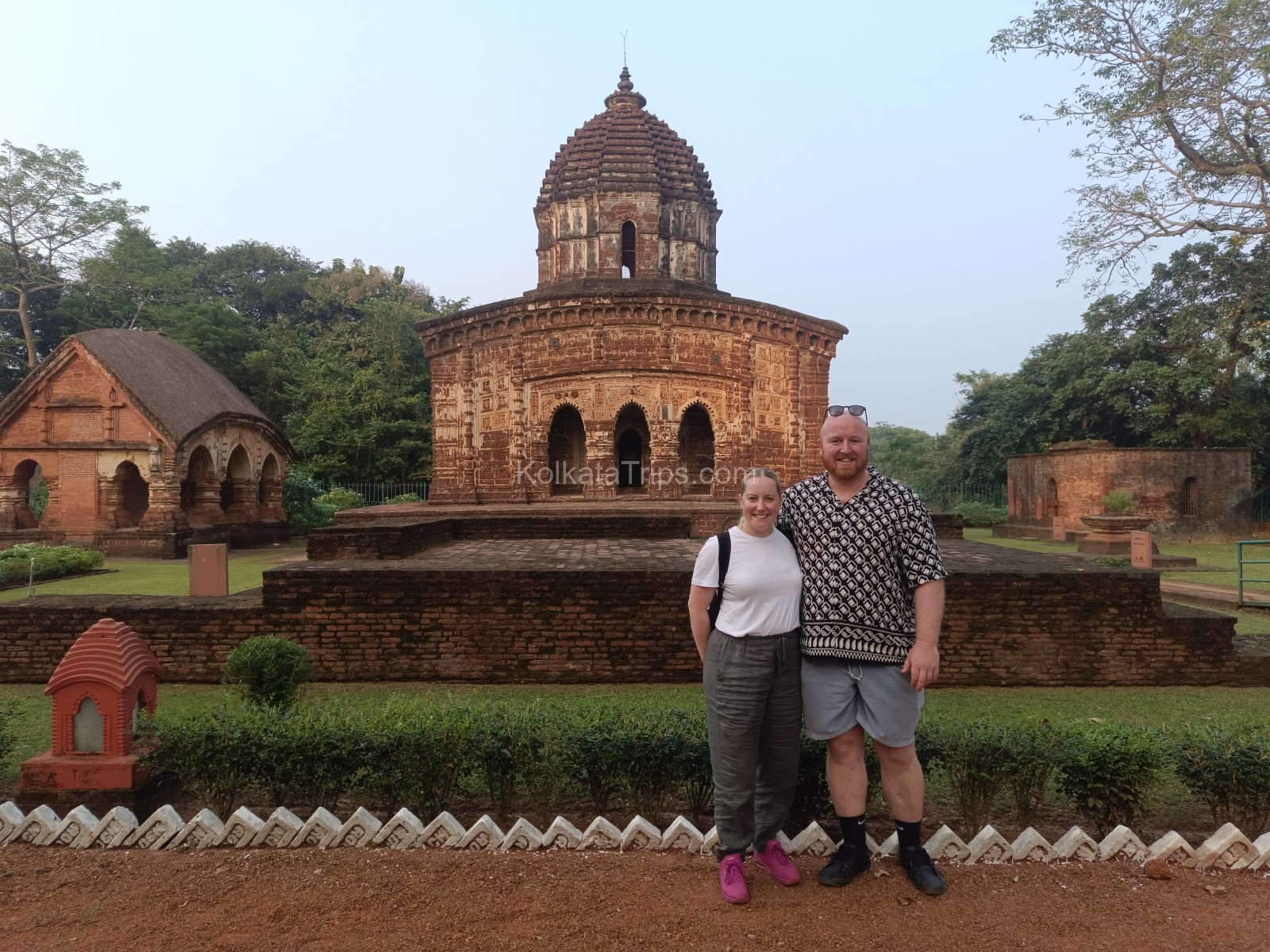
The first stop on your Day Trip to Bishnupur from Kolkata is the iconic Rasmancha, the oldest surviving brick monument in Bishnupur and arguably its most recognisable landmark.
Built around 1600 CE by King Bir Hambir, Rasmancha was not designed as a conventional temple. Instead, it served as a ceremonial pavilion where idols from various temples across Bishnupur were displayed during the annual Ras Festival, allowing devotees to worship all the deities in one place.
Its unique architecture immediately captures attention. A massive laterite platform supports a pyramid-shaped superstructure surrounded by elegant arched galleries on all sides. This combination of Bengali hut-style roofs and Islamic-inspired arches creates an architectural masterpiece found nowhere else in India.
As sunlight filters across the weathered terracotta surfaces, photographers find endless opportunities to capture dramatic perspectives of this extraordinary monument.
Stop 2: Gumghar
A short distance away stands the mysterious Gumghar, one of Bishnupur's lesser-known yet historically intriguing structures.
Local legends suggest that Gumghar may have served as a prison or detention chamber during the Malla period, though historians continue to debate its exact purpose. Some believe it functioned as a secure storage facility or military watch structure.
Although relatively simple in appearance compared with Bishnupur's ornate temples, Gumghar provides valuable insight into the administrative and defensive systems that supported the prosperous Malla Kingdom.
Its thick laterite walls and strategic location reflect the practical aspects of governance during medieval Bengal.
Stop 3: Shyam Rai Temple
Among the architectural highlights of any Bishnupur Tour Plan, the magnificent Shyam Rai Temple stands as one of the greatest masterpieces of Bengal temple architecture.
Constructed in 1643 by King Raghunath Singha, this remarkable Pancharatna (five-towered) temple is dedicated to Lord Krishna.
The temple's greatest attraction lies in its astonishing terracotta artwork. Nearly every exterior surface is covered with intricately carved plaques portraying episodes from Krishna's childhood, scenes from the Mahabharata and Ramayana, dancers, musicians, warriors, floral motifs, hunting scenes, and everyday village life.
Each panel demonstrates extraordinary artistic precision, allowing visitors to appreciate not only religious symbolism but also invaluable visual records of seventeenth-century Bengal.
Architects frequently regard Shyam Rai Temple as one of the finest surviving examples of Bengal's terracotta temple tradition.
Stop 4: Jor Bangla Temple
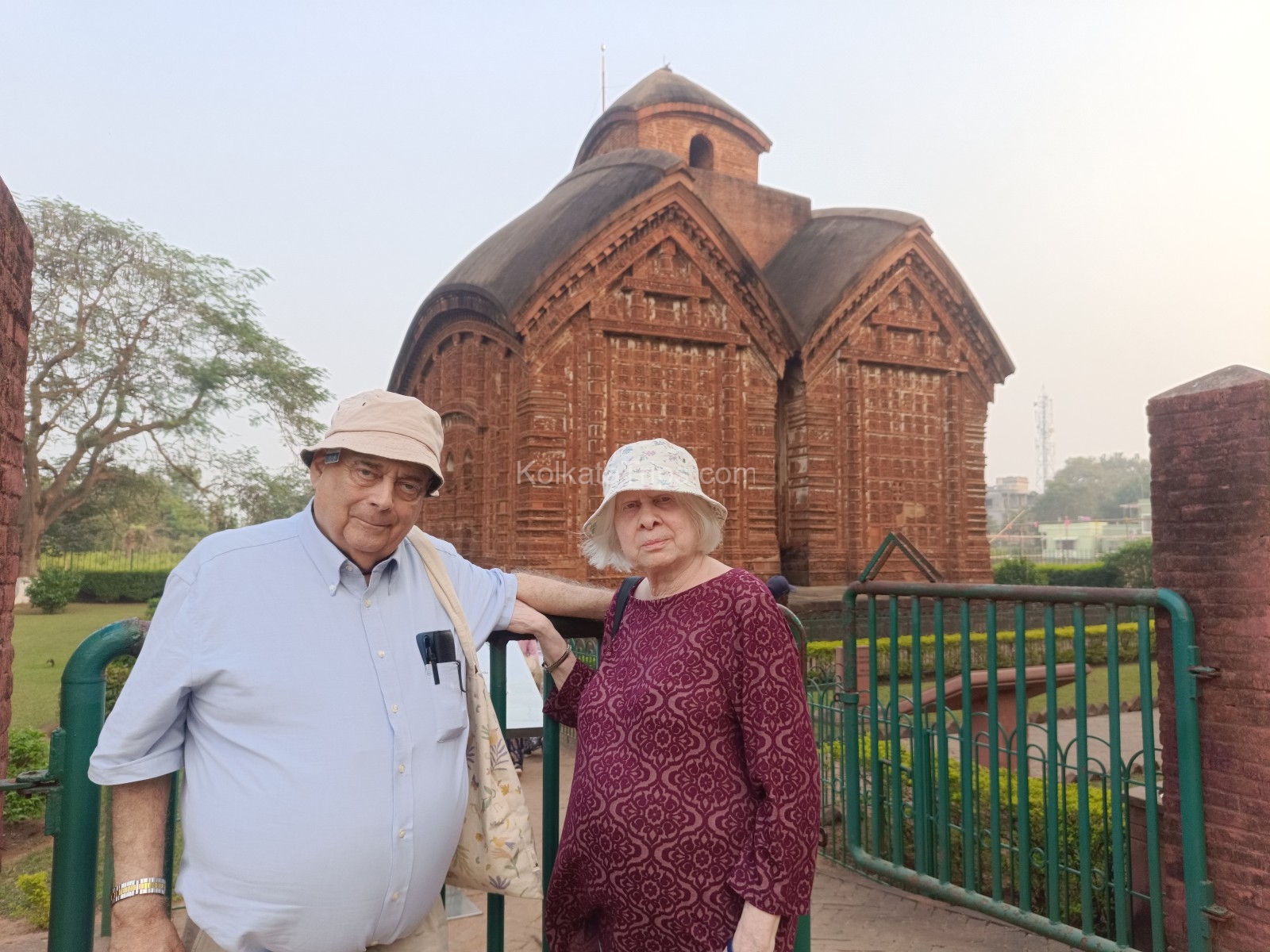
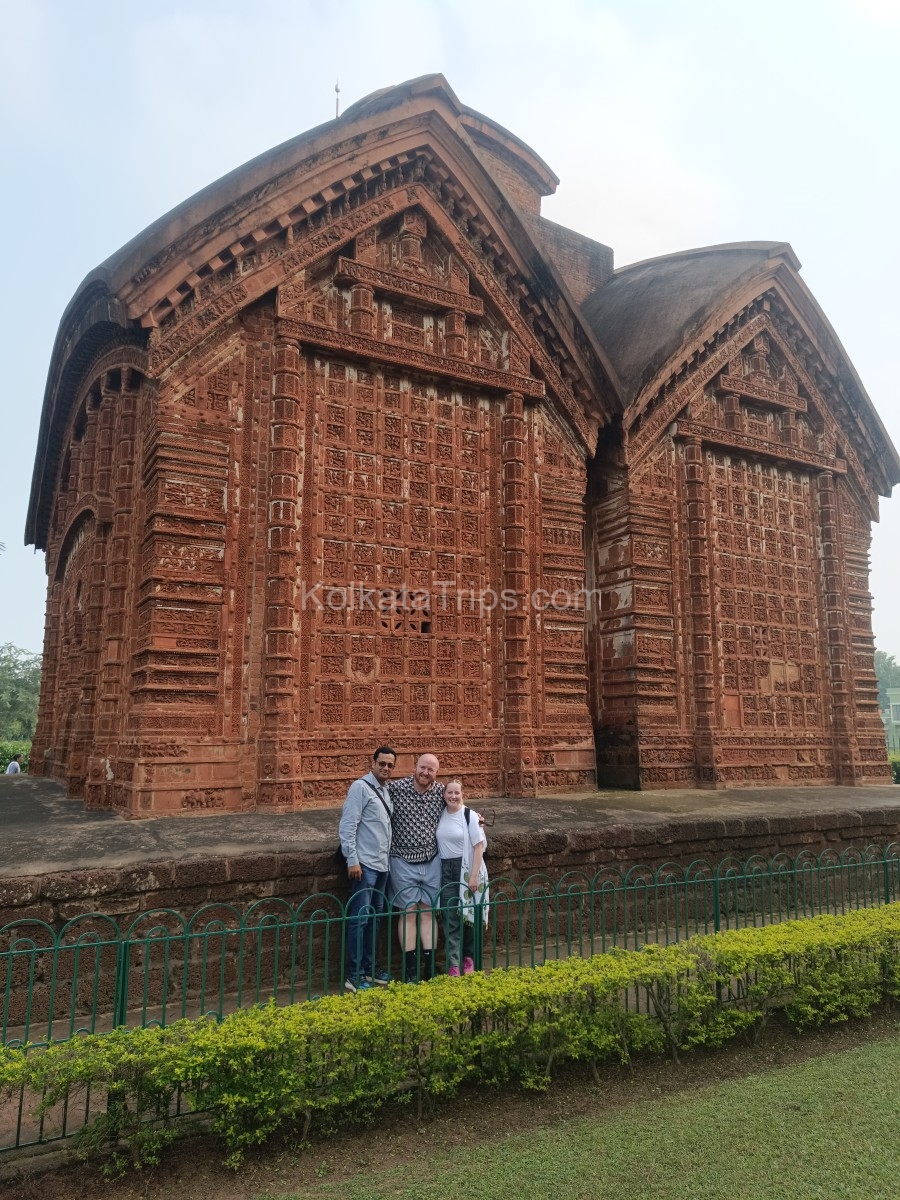
Few monuments better represent traditional Bengali architecture than the celebrated Jor Bangla Temple.
Completed in 1655 by King Raghunath Singha II, the temple derives its name from its distinctive design, which resembles two traditional Bengali village huts joined together.
This innovative architectural concept combines indigenous rural building techniques with sophisticated temple design. The sloping curved roofs successfully adapted vernacular housing styles into monumental religious architecture.
The temple walls feature exceptionally detailed terracotta reliefs illustrating scenes from the Ramayana, Krishna Leela, processions of elephants and horses, musicians, dancers, floral decorations, and scenes from everyday social life.
Art historians frequently describe Jor Bangla Temple as one of the greatest achievements of Bengal's architectural heritage because it beautifully integrates local traditions with religious symbolism.
Stop 5: Radha Shyam Temple
Built during the eighteenth century, the Radha Shyam Temple reflects the later evolution of Bishnupur's temple architecture.
Unlike the earlier Pancharatna temples, this Ek-Ratna (single tower) temple displays a more restrained yet elegant architectural style. Dedicated to Radha and Krishna, the temple continues the artistic tradition of elaborate terracotta ornamentation while incorporating refined decorative patterns and balanced proportions.
Visitors are often drawn to its peaceful surroundings and beautifully preserved façade, where terracotta panels depict scenes from Hindu mythology alongside geometric and floral motifs. The temple offers a serene atmosphere that encourages quiet reflection while showcasing the enduring craftsmanship of Bishnupur's master artisans.
Stop 6: Mrinmoyee Temple
Among Bishnupur's oldest and most revered places of worship is the Mrinmoyee Temple, dedicated to Goddess Durga.
According to local tradition, the original shrine was established by the founder of the Malla dynasty over a thousand years ago, making it one of the earliest sacred sites in the region. Although the present structure has undergone renovations over the centuries, the temple continues to play a central role in Bishnupur's religious life.
Unlike the Vaishnava temples that dominate the town, the Mrinmoyee Temple reflects the enduring Shakta traditions of Bengal. During the annual Durga Puja celebrations, devotees from across the region gather here to seek the blessings of the goddess, keeping alive rituals that have been observed for generations.
Its historical and spiritual significance makes it an essential stop on any One Day Trip to Bishnupur from Kolkata.
Stop 7: Gar Darwaja (Fort Gateway)
Your final stop in this section of the tour is Gar Darwaja, the impressive fortified gateway that once formed part of the defensive complex protecting the Malla capital.
Constructed from massive laterite blocks, Gar Darwaja served as one of the principal entrances to the fortified city. The gateway reflects the strategic planning of the Malla rulers, who surrounded their capital with strong defensive walls, moats, and gateways to safeguard the kingdom.
Standing before the gateway today, it is easy to imagine the bustling royal processions, soldiers, merchants, and pilgrims who once passed through these imposing arches centuries ago.
Although much of the original fortifications has disappeared, Gar Darwaja remains an evocative reminder of Bishnupur's political and military importance during its golden age.
Stop 8: Stone Chariot
One of Bishnupur's lesser-known yet fascinating heritage attractions is the Stone Chariot, a beautifully crafted monument inspired by the grand temple chariots of eastern India. Although smaller than the famous chariot at Hampi or Konark, it reflects the artistic imagination and engineering skills of the Malla period.
Constructed from laterite stone, the chariot is adorned with elegant carvings and ornamental details that showcase the craftsmanship for which Bishnupur is renowned. It was designed as a symbolic representation of the divine vehicles used during Hindu religious festivals and demonstrates how local artisans adapted architectural styles from different parts of India while preserving Bengal's distinctive artistic identity.
Today, the Stone Chariot provides an excellent opportunity for photography and offers another glimpse into the creativity that flourished under the patronage of the Malla Kings.
Stop 9: Madan Mohan Temple
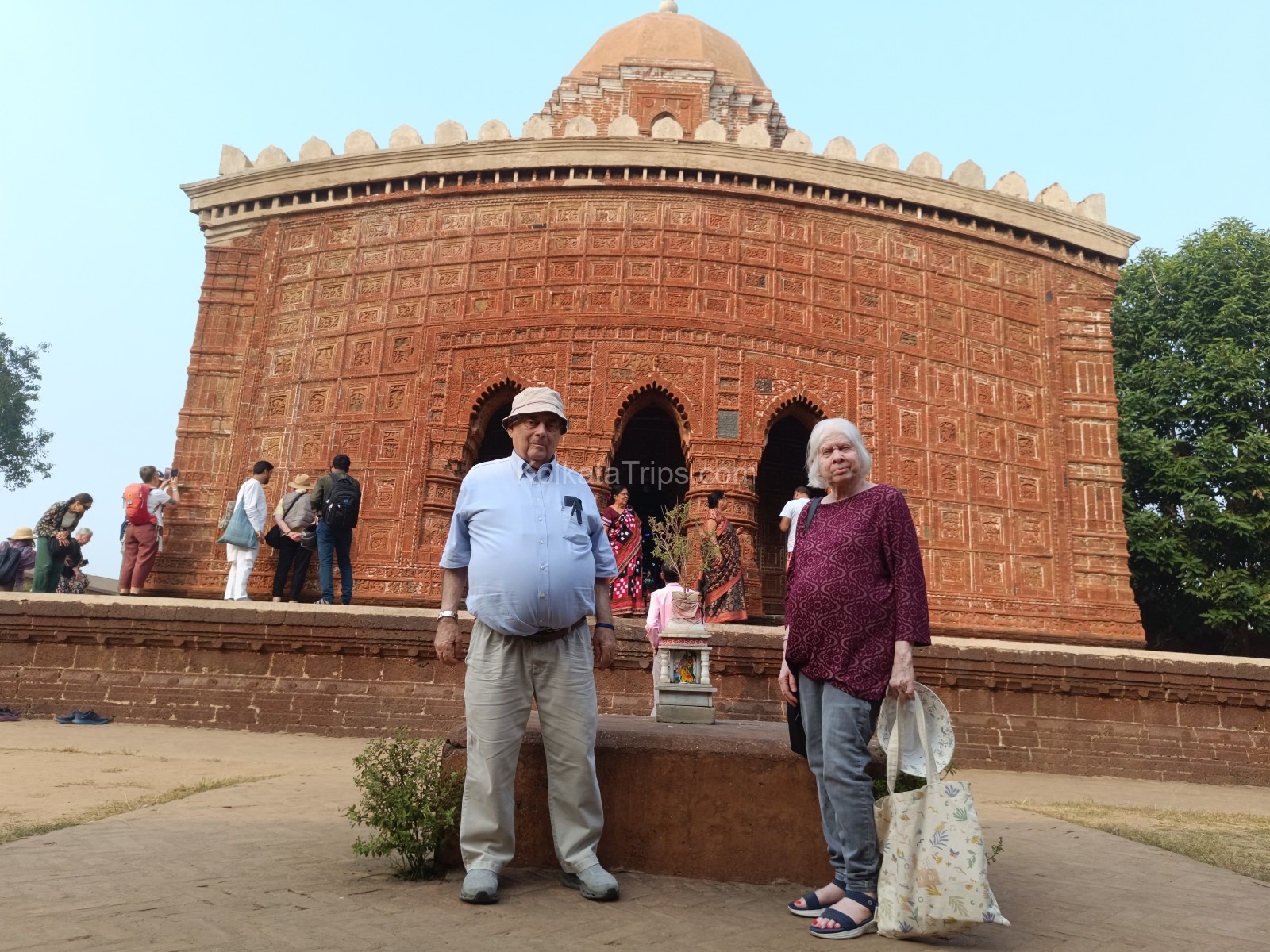
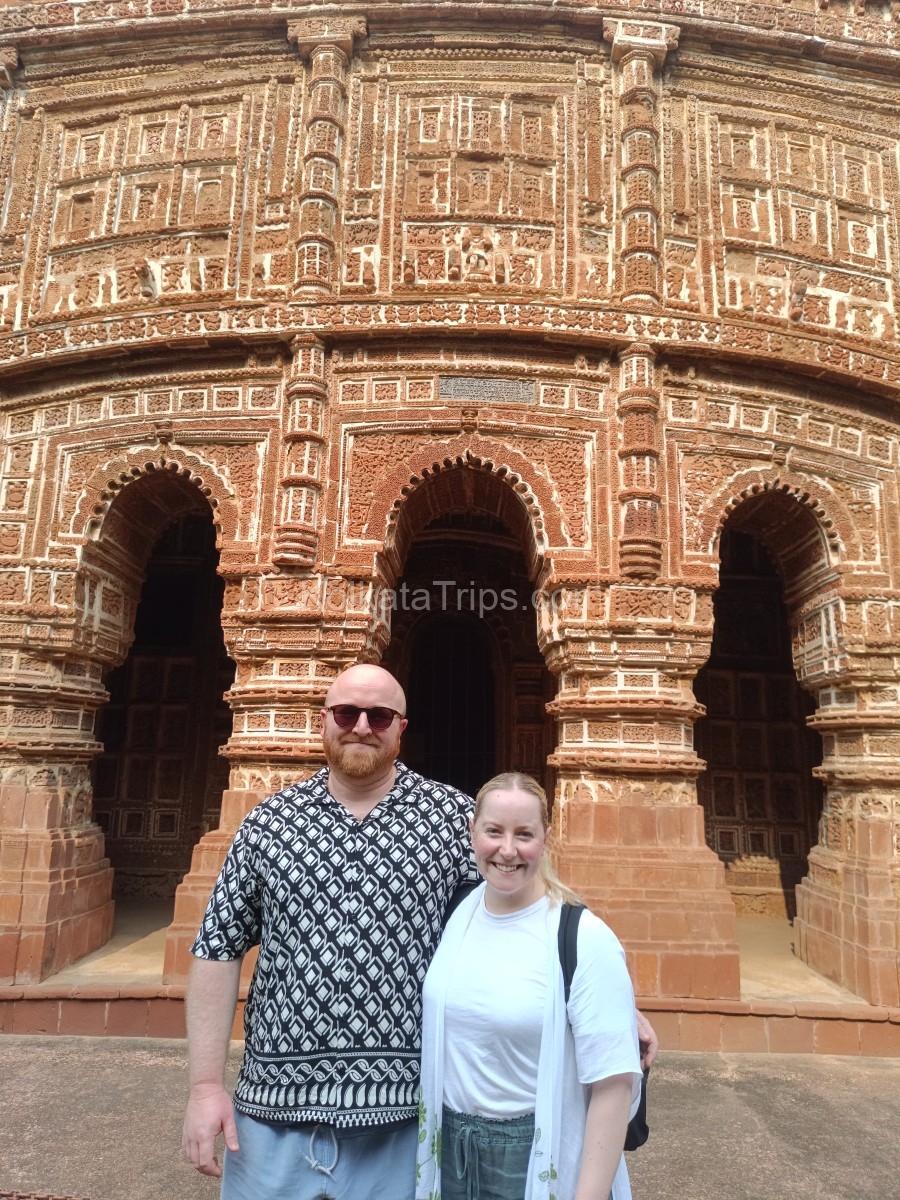
No Bishnupur Tour is complete without visiting the magnificent Madan Mohan Temple, considered the spiritual heart of the town.
Built in 1694 CE by King Durjana Singh Dev, this elegant Ek-Ratna temple is dedicated to Lord Krishna as Madan Mohan. It remains one of the few temples in Bishnupur where regular worship continues even today, making it both an important historical monument and a living place of devotion.
Architecturally, the temple represents the maturity of Bengal's temple-building tradition. Its square sanctum is crowned by a graceful tower while the surrounding walls are richly decorated with exquisite terracotta panels.
The carvings illustrate remarkable scenes including:
- Krishna Leela
- Episodes from the Ramayana
- Stories from the Mahabharata
- Floral motifs
- Mythical creatures
- Royal hunting expeditions
- Musicians and dancers
- Daily life in seventeenth-century Bengal
The precision of these terracotta sculptures is astonishing. Each brick tells a story, transforming the temple walls into an open-air museum of medieval Bengali art.
For historians, Madan Mohan Temple represents one of the finest surviving examples of devotional architecture in eastern India. For visitors, it offers an unforgettable experience where history, religion and art exist in perfect harmony.
Stop 10: Dalmadal Cannon
Standing proudly near the old fortifications is one of Bishnupur's most iconic historical symbols—the Dalmadal Cannon.
Cast from wrought iron, this massive cannon measures approximately 3.8 metres (12.5 feet) in length and weighs several tonnes. Despite being more than three centuries old, it remains remarkably well preserved.
The cannon is closely associated with one of Bishnupur's most famous legends.
According to local folklore, when the Maratha Bargi raiders attacked Bengal during the eighteenth century, Lord Madan Mohan himself is believed to have descended from the temple and fired the Dalmadal Cannon to protect Bishnupur from invasion.
Although historians attribute the defence of the kingdom to the Malla army rather than divine intervention, the legend remains deeply rooted in local tradition and continues to be passed down through generations.
The cannon itself demonstrates the advanced metallurgical knowledge possessed by the craftsmen of the Malla Kingdom. It also serves as a reminder that Bishnupur was not only a centre of art and culture but also a strategically important fortified capital capable of defending itself against external threats.
Stop 11: Chinnamasta Temple
Adding another spiritual dimension to your One Day Trip to Bishnupur by Car, the Chinnamasta Temple offers a unique contrast to the predominantly Vaishnava heritage of the town.
Dedicated to Goddess Chinnamasta, one of the ten Mahavidyas in Hindu Tantra, the temple attracts devotees seeking blessings for courage, protection and spiritual transformation.
Unlike the terracotta temples built by the Malla Kings, the Chinnamasta Temple is a comparatively modern shrine that has become an important pilgrimage destination in recent decades.
The temple's vibrant atmosphere, devotional rituals and colourful surroundings provide visitors with an opportunity to experience the continuing religious traditions of Bengal.
During major Hindu festivals, especially Kali Puja and Navaratri, thousands of devotees gather here, creating an atmosphere filled with prayers, devotional music and traditional offerings.
For many visitors, the temple highlights how Bishnupur successfully preserves both its ancient heritage and its living spiritual culture.
Stop 12: Local Baluchari Silk Weavers Workshop
After exploring Bishnupur's architectural treasures, your journey concludes with one of the most memorable cultural experiences—the Baluchari Silk Weavers Workshop.
Bishnupur is internationally celebrated for producing the famous Baluchari Silk Sarees, among the finest handwoven textiles in India.
The tradition dates back several centuries and flourished under the patronage of the Malla rulers before being revived in Bishnupur during the twentieth century.
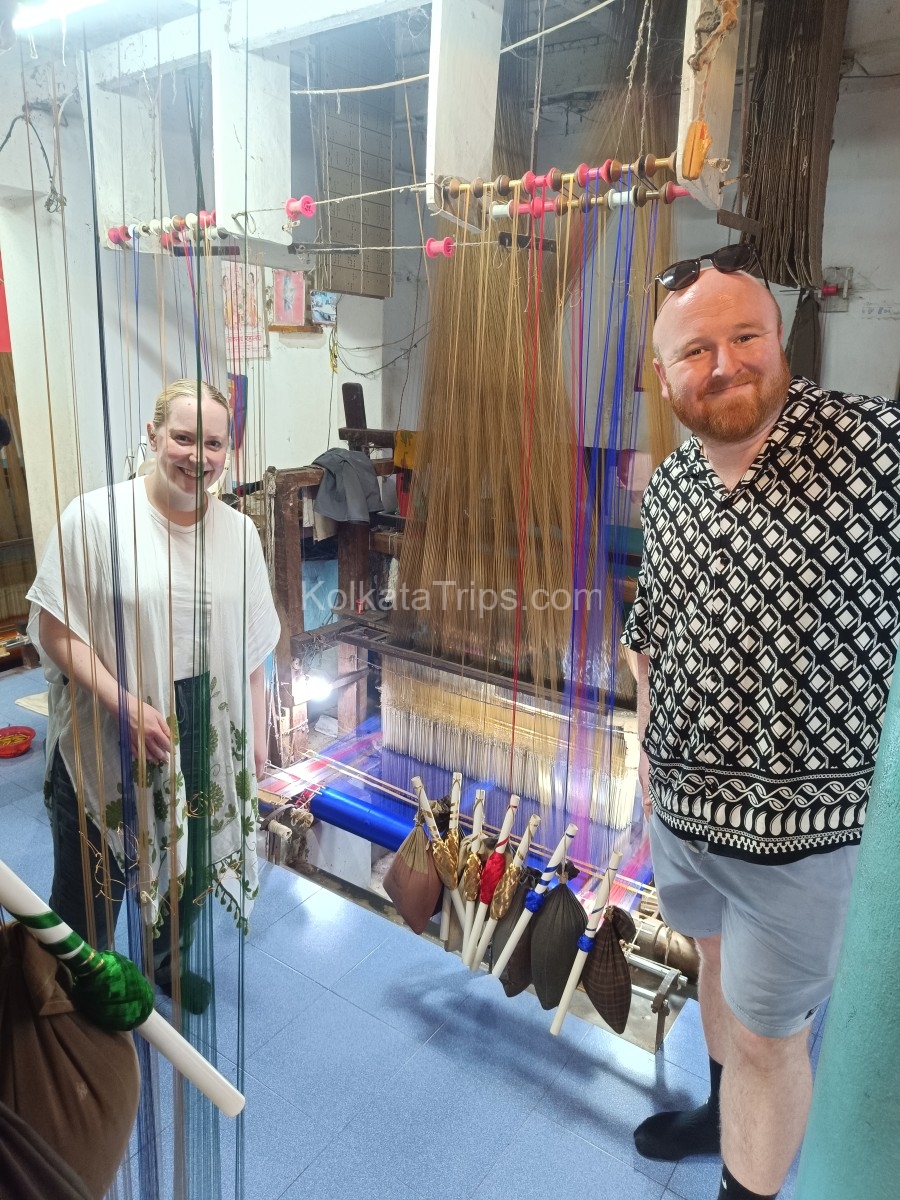
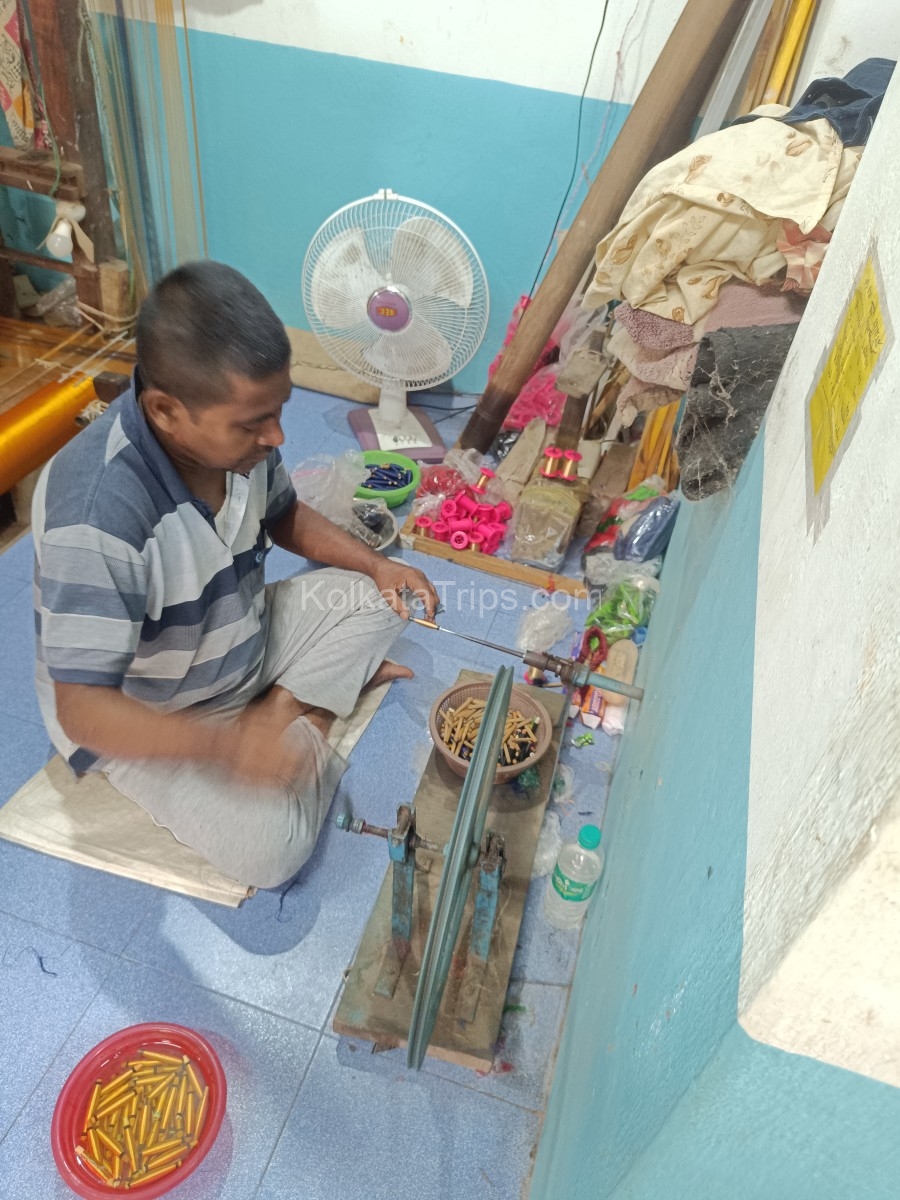
Inside a traditional weaving workshop, visitors can witness master artisans transforming fine silk threads into breathtaking works of art.
Using intricate jacquard looms, skilled weavers patiently create elaborate motifs depicting:
- Episodes from the Ramayana
- Krishna Leela
- Royal processions
- Mythological stories
- Floral borders
- Traditional Bengali patterns
Each saree may require anywhere from one week to several months to complete depending on the complexity of the design.
Watching the weaving process offers a fascinating insight into a craft that has been carefully preserved across generations.
Guests also have the opportunity to meet local artisans, learn about natural silk production and purchase authentic Baluchari sarees directly from the weavers.
Buying directly from the workshop supports local families and helps preserve one of Bengal's most treasured artistic traditions.
For many travellers, this interaction with the craftsmen becomes the highlight of the Day Trip to Bishnupur: Terracotta Temples & Silk Weavers.
Tour Details & Inclusions
| Feature | Details |
|---|---|
| Tour Type | Private Guided Day Trip to Bishnupur |
| Duration | Approximately 12 Hours |
| Start Time | Flexible; normally between 8:00 AM and 9:00 AM |
| Pickup & Drop-off | Included within Kolkata city limits |
| Vehicle | Private Air-Conditioned Vehicle |
| Guide | Professional Local English-Speaking Guide |
| Tour Style | Private, Flexible & Customisable |
| Lunch | Flexible lunch break; meal cost not included |
| Ideal For | Couples, families, senior travellers, first-time visitors and small groups |
Recommended Start Time
We recommend starting around 08:00 AM from Kolkata. An early departure allows more comfortable sightseeing time in Bishnupur and provides greater flexibility during the day.
The exact pickup time can be discussed according to your hotel location, itinerary and travel plans.
Included
- Customised Private Tour by Air-Conditioned Vehicle along with Govt. approved English Speaking Professional Tour Guide
- All essential Fees & Taxes as per the Itinerary, including Guide Fees, Fuel, Parking & Toll Charges
- Refreshments & Packed Drinking Water
- Hotel Pickup and Drop-off for a seamless travel experience.
- A scheduled lunch break (meal cost not included), giving you the flexibility to try local flavors
Not Included
- Meals and personal expenses unless specified
- Gratuities (at your discretion)
- Any services or expenses not specifically mentioned under "Included"
Architecture and Design of the Terracotta Temples of Bishnupur
Unique Bengal Terracotta Style
Bishnupur temples developed revolutionary architecture drawing inspiration from local Bengali huts rather than replicating North Indian stone temples. Stone scarcity in Bengal's flood plains prompted architects to develop entirely new architectural vocabulary using locally available clay and brick materials.
Architects discovered that terracotta enabled decorative possibilities far exceeding stone capabilities. Both additive techniques (building up decorative elements) and subtractive methods (carving into surfaces) expanded artistic flexibility. Curved brick arrangements created sophisticated vaults and domes supporting massive roofs without stone support or external bracing.
The Ratna Style Variations
Eka-ratna (Single Pinnacle): One central tower creating vertical ascension emphasis, seen in Madanmohan and Radhashyam temples representing focused spiritual orientation.
Pancha-ratna (Five Pinnacles): One large central tower with four corner towers, exemplified by Pancha Ratna Temple, creating elaborate architectural silhouettes reflecting cosmic order.
Bangla Style: Two or more curved roofs joined together, revolutionizing Indian temple architecture—Jor Bangla demonstrates the finest example of vernacular architectural integration with sacred spaces.
Decorative Terracotta Panels
These extraordinary narrative sculptures communicated stories, theology, and cultural knowledge to largely illiterate populations. Artists rendered mythological tales with remarkable detail, capturing movement, emotion, and narrative complexity within the terracotta medium. Panel subjects include Ramayana and Mahabharata episodes, Krishna Leela scenes, hunting and battle scenes, daily life depictions, animals both real and mythological, celestial beings, and ornamental patterns.
Book Your Private Day Trip to Bishnupur with Kolkata Trips
Escape the city and uncover one of West Bengal's most captivating heritage destinations on a carefully curated private tour with Kolkata Trips. Explore magnificent terracotta temples, meet skilled Baluchari silk artisans, and discover the fascinating history of the Malla Kingdom—all while travelling in the comfort of a private air-conditioned vehicle with an experienced local guide.
Whether you're visiting Kolkata for the first time or looking to explore beyond the city, our Day Trip to Bishnupur: Terracotta Temples & Silk Weavers offers an enriching blend of history, architecture, art, and culture.
Reserve your private Bishnupur tour today and let Kolkata Trips take you on an unforgettable journey through one of Bengal's greatest cultural treasures.
Frequently Asked Questions
Is a day trip to Bishnupur from Kolkata possible?
Yes. Bishnupur is approximately 140 km from Kolkata and takes around 3.5 to 4 hours by road, depending on traffic making it an ideal destination for a private full-day excursion. An early morning departure allows ample time to explore the town's temples, heritage sites, and Baluchari silk workshops before returning to Kolkata in the evening.
Why is Bishnupur famous?
Bishnupur is renowned for its magnificent terracotta temples built by the Malla Kings, the exquisite Baluchari silk sarees, the Bishnupur Gharana of Hindustani classical music, and its rich cultural heritage. The town is also on UNESCO's Tentative List of World Heritage Sites.
How far is Bishnupur from Kolkata?
Bishnupur is approximately 140 kilometres (87 miles) from Kolkata and takes around 3.5 to 4 hours by road, depending on traffic.
What is included in the Day Trip to Bishnupur?
Our private tour includes:
- Hotel pickup and drop-off in Kolkata
- Private air-conditioned vehicle
- Professional English-speaking guide
- Sightseeing of major heritage monuments
- Visit to a Baluchari silk weaving workshop
- Bottled drinking water
- Flexible sightseeing schedule
Is Bishnupur suitable for families?
Absolutely. Bishnupur is a family-friendly destination that offers history, culture, architecture, photography, and traditional crafts. The relaxed atmosphere makes it enjoyable for travellers of all ages.
Which temples are covered during the tour?
The itinerary includes:
- Rasmancha
- Shyam Rai Temple
- Jor Bangla Temple
- Radha Shyam Temple
- Madan Mohan Temple
- Mrinmoyee Temple
- Gar Darwaja
- Gumghar
along with several other important heritage landmarks.
Are the temples UNESCO World Heritage Sites?
The terracotta temples of Bishnupur are included on UNESCO's Tentative List of World Heritage Sites, recognising their outstanding architectural and cultural significance.
Can the itinerary be customised?
Yes. As this is a private tour, Kolkata Trips can tailor the itinerary to suit your interests, available time, and travel preferences.
How do I book the tour?
You can book directly through the Kolkata Trips website or contact our team to confirm availability and customise your itinerary.
What should I bring?
We recommend carrying:
- Comfortable walking shoes
- Sunglasses
- Hat or cap
- Sunscreen
- Camera
- Personal medications
Why choose Kolkata Trips?
Kolkata Trips specialises in premium private tours across West Bengal. With experienced local guides, comfortable transportation, personalised itineraries, and a passion for sharing Bengal's heritage, we offer memorable travel experiences designed around your interests.
Guest Feedbacks






office hours
08:00 AM - 08:00 PM (IST)
Online Operating Hours
Open 24 Hours for E-Mails,
Calls and WhatsApp
Address
87EE/16, Anupama Housing Complex, VIP Road, Kolkata, West Bengal, India - 700052